Building in Flagstone means putting a slab on some of the most reactive ground in the growth corridor. It sits inside the Greater Flagstone Priority Development Area, a state-declared greenfield growth front of about 7,188 hectares that was set aside in 2010 and planned for roughly 51,500 new homes over a 30-to-40-year build-out. That single fact changes how a soil test fits into your project. Almost every block being built on here is a freshly released lot carrying its first-ever slab, so a new AS 2870 site classification is needed before footing design rather than being able to lean on an older report from a neighbouring house.
The ground itself is the second reason. Government land-resource mapping of the Logan River corridor around Flagstone and Jimboomba records deep black cracking clays on the alluvial plains - reactive, shrink-swell soils that expand when wet and contract when dry. South-East Queensland's wet-summer, dry-winter rainfall pattern drives that seasonal moisture cycle, and the resulting ground movement is a leading cause of cracking in slabs and walls when footings are not matched to the site. Reactivity varies from block to block, though, which is exactly why the class has to be measured on your lot rather than assumed from a map.
There is also an approval quirk worth knowing. Development in Greater Flagstone is assessed by Economic Development Queensland under the Greater Flagstone Development Scheme, not through the standard Logan City Council planning process, even though the land is inside the Logan local government area. Wagner's role sits alongside that pathway rather than inside it: we supply the AS 2870 site classification your engineer and certifier rely on to design the slab, whichever authority assesses the application.
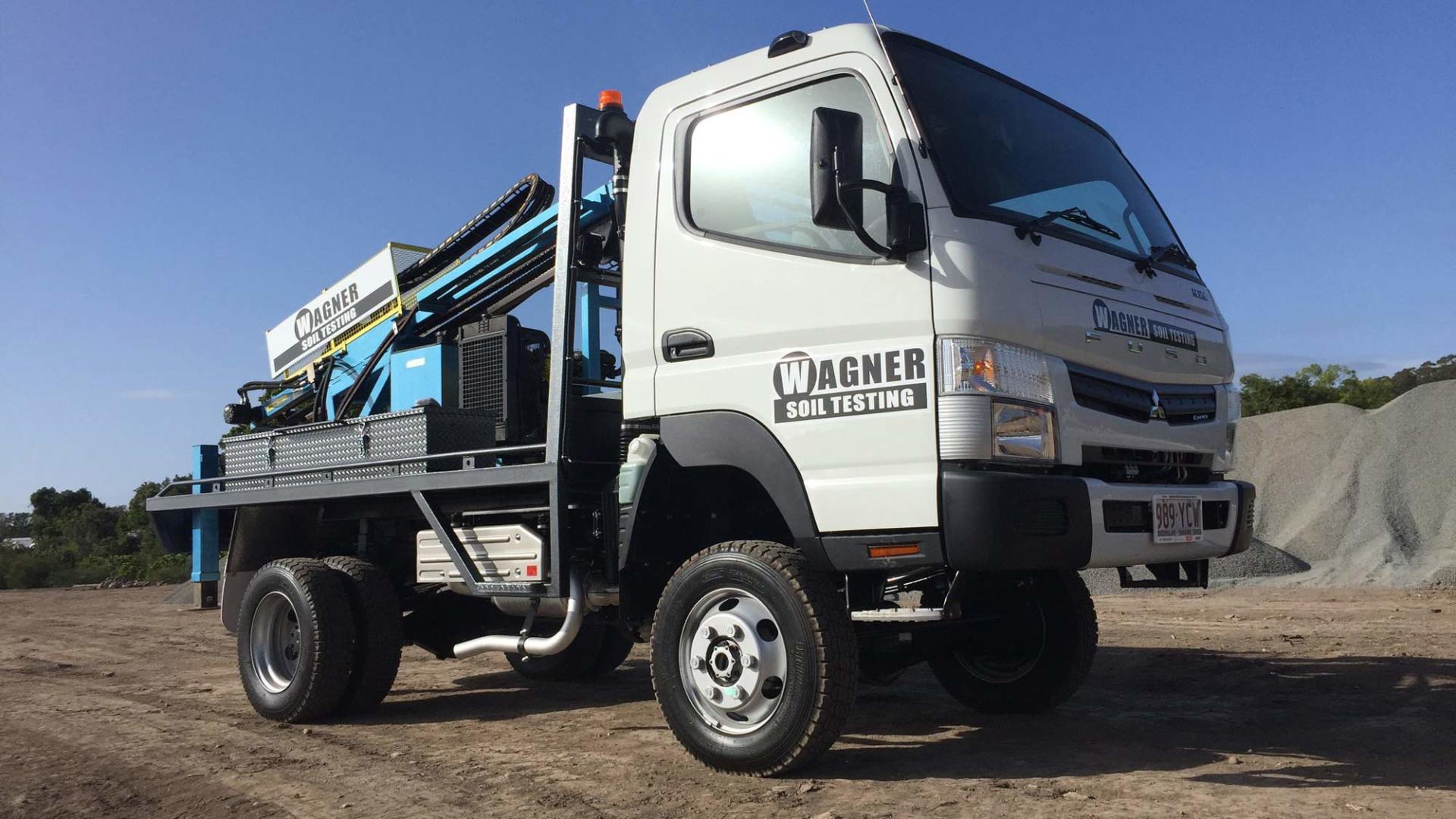
Wagner Soil Testing handles this the same defensible way on every lot. We drill two boreholes two metres deep near the proposed footing area, run two DCP or bearing-capacity tests beside them, then analyse the samples in our own NATA-accredited laboratory before returning your classification - one of the six AS 2870 classes from A through to P, ranked by expected ground movement. That gives your builder a number they can design to, so the footings are neither over-engineered nor left short.
Greater Flagstone is planned for roughly 51,500 new homes on some of the most reactive ground in the corridor — the clearest case for a block-specific classification before slab design.