Most of Queensland's high-profile growth fronts are state-declared Priority Development Areas, but Park Ridge is different: it is an urban growth area under Logan City Council's own Park Ridge Structure Plan, so approvals run through the council's normal planning path rather than a PDA development scheme. That distinction matters for the ground you build on. The 2021 Census records a young, family suburb - a median age of around 30 and a housing stock that is overwhelmingly detached and semi-detached - yet with a relatively high share of homes owned outright sitting alongside large mortgage and rental cohorts. In practice that tenure mix points to a suburb in transition, where long-held large and acreage lots are gradually being carved into new estates. The result is that the soil under a fresh slab is often former acreage, and two neighbouring blocks cannot be assumed to behave the same way.
The local geology reinforces the point. Park Ridge and the wider western-Logan area sit chiefly over the Neranleigh-Fernvale Beds, with clayey and sandy alluvium along the creek-valley floors. These parent materials can weather to clay-bearing soils, and clay-rich ground can swell when wet and shrink when dry - a common driver of footing and wall movement across the SEQ corridor. We say 'can be' deliberately: regional mapping shows the pattern, but only a site-specific test tells you how a particular Park Ridge lot will actually behave, so we never assign a class from a map.
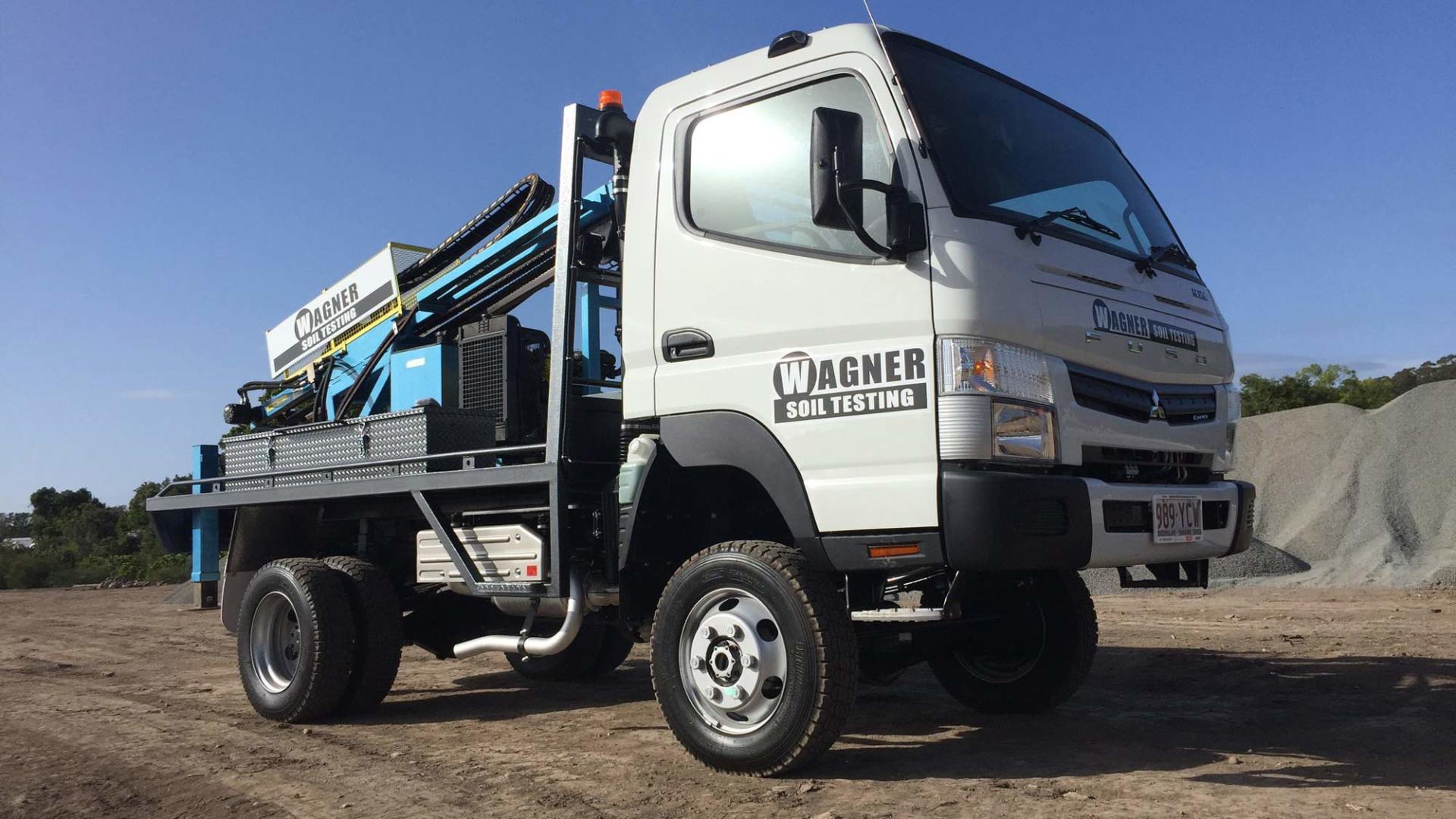
That is what a soil test settles. Residential slabs and footings are classified under AS 2870, which ranks a site by its expected ground movement into one of six classes - A, S, M, H, E and P. To find your class, Wagner drills two boreholes two metres deep near the proposed footing area, runs two DCP or bearing-capacity checks alongside them, and analyses the samples back in our NATA-accredited laboratory. The class we return is the figure your slab designer and private building certifier rely on - and getting it before your build contract is signed is how cost surprises are caught early rather than after the price is locked.
Park Ridge grows under Logan City Council's own structure plan rather than a PDA — but every new slab still needs an AS 2870 site classification your certifier can rely on.