Springfield Lakes reads differently from a raw greenfield estate. It sits inside Greater Springfield, a large master-planned community, and the 2021 Census counted 17,211 residents, about 6,100 private dwellings and 96% separate houses, with a median age of 31 and thousands of families. In practice that puts two customer groups on the same streets: builders finishing the remaining new slabs, and established owners adding an extension, a pool, a shed or a retaining wall. Both need a site classification, because the classification describes the ground a footing will sit on, not the house that happens to be next door.
Underneath the suburb the ground is not inert. The Ipswich-to-Springfield corridor is underlain by the clay-rich Walloon Coal Measures, a Jurassic sequence of claystones, shales and siltstones. Clay-derived soils like these can be reactive: they swell as they take up moisture and shrink as they dry, and that movement is a common cause of cracking in slabs and walls across the SEQ clay belt. The local rainfall pattern feeds the cycle, with a wetter late summer and a drier winter driving the seasonal swing. None of this tells you the class of any single Springfield Lakes block - only a test on your lot can do that - but it explains why the class is worth knowing before you pour.
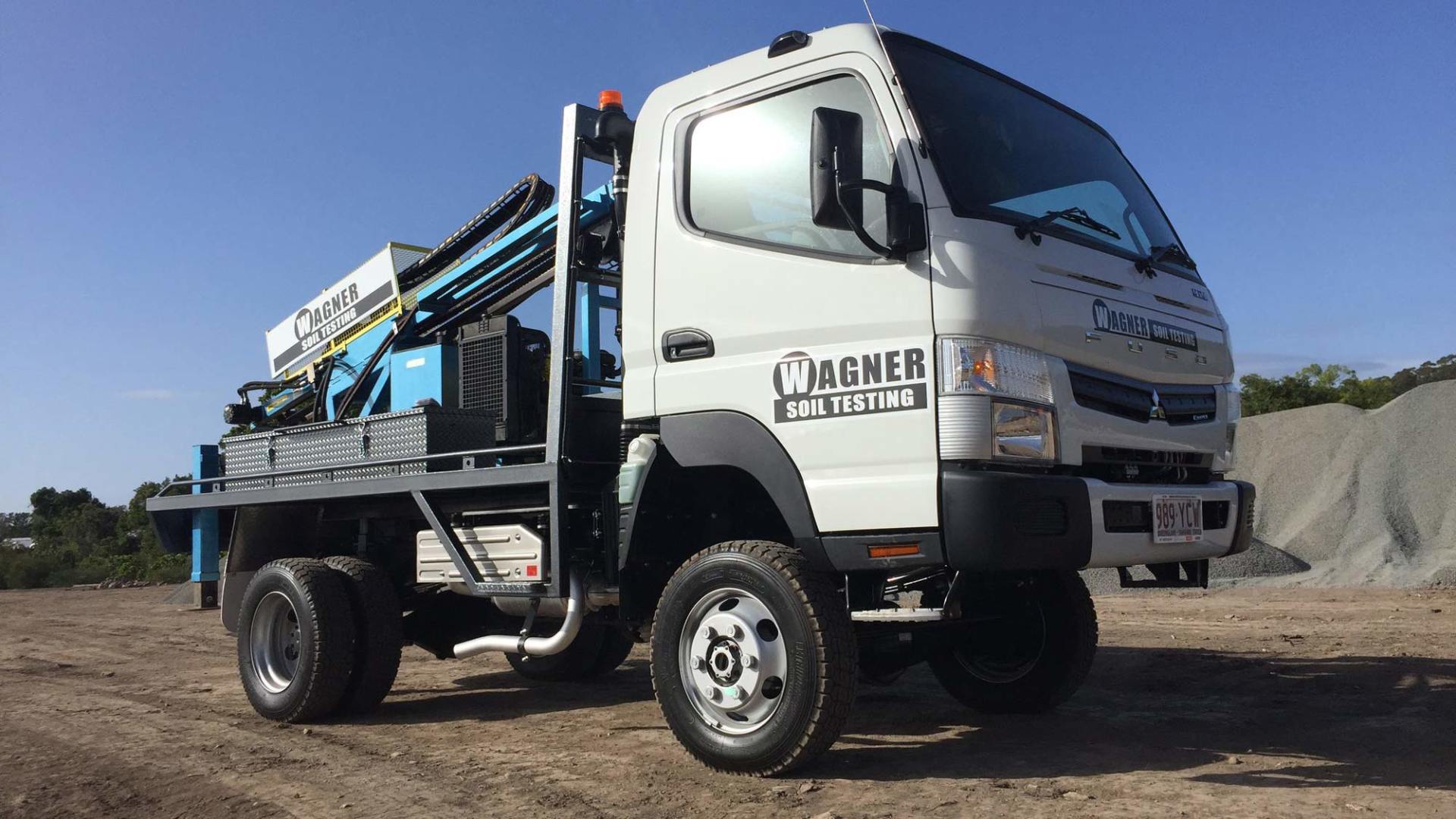
A site classification settles it. Under AS 2870, the residential slabs and footings standard, a site is ranked by how much the ground is expected to move, and Wagner reports one of six classes - A, S, M, H, E or P, from little movement to a lot. To reach that class on your block, Wagner drills two boreholes two metres deep near the proposed footing area, runs two DCP or bearing-capacity checks beside them, and sends the samples to the laboratory for analysis. Because that laboratory is NATA-accredited (No. 15070), the report is the kind a certifier and Ipswich City Council will accept when the building approval is assessed.
Springfield Lakes sits inside Greater Springfield, where 96% of homes are separate houses — every slab, from a first build to a knock-down rebuild, still starts with a site classification.