Two things make soil testing in Deebing Heights different from the sewered suburbs around it: how new the housing is, and how varied the blocks are. The suburb grew quickly as masterplanned estates opened, and the 2021 Census counted 3,960 residents living almost entirely in separate houses - 99.2% of occupied dwellings - most of them young families. Nearly every one of those homes is a recent build, and in Queensland a new detached house needs an AS 2870 site classification before the slab and footings are designed. The classification grades a block from Class A (little to no ground movement) through to Class P, and that grade feeds straight into how the slab is engineered.
Why does the ground move here at all? Southern Ipswich, including the Deebing Heights area, sits over the sedimentary rock of the Ipswich Basin - claystones, shales and siltstones - the kind of fine-grained parent material that commonly weathers to reactive clay. Reactive clays swell as they take up moisture and shrink as they dry out, and across the Ipswich corridor that shrink-swell movement is a common cause of footing and wall cracking. It is why a measured classification, backed by lab results, matters more than an assumption.
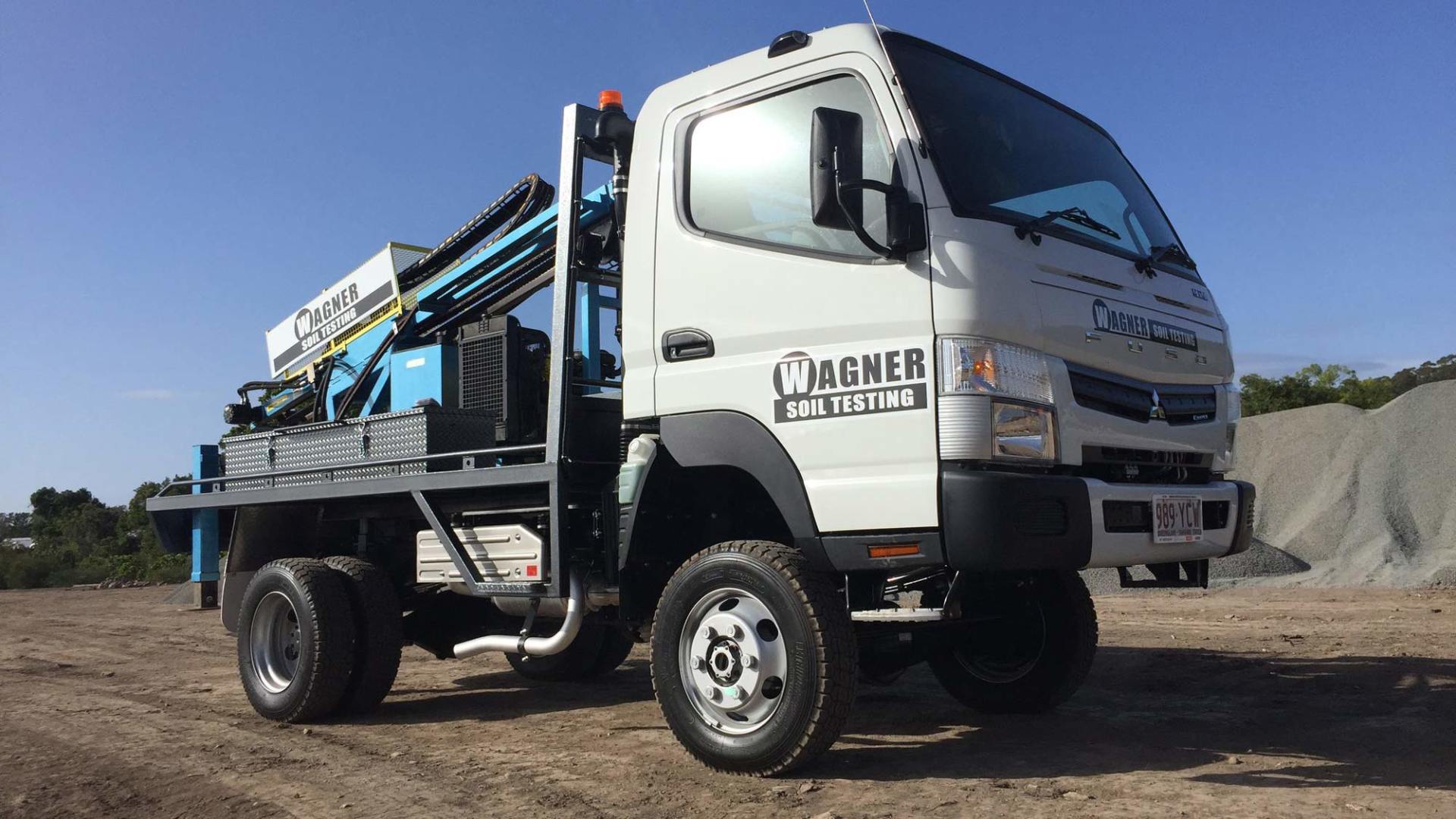
The second difference is the southern fringe. Alongside the estate lots, Deebing Heights keeps a band of larger acreage and rural-residential blocks, and many of those are not connected to sewer. For an unsewered block, Ipswich City Council is generally the assessing authority for on-site sewerage work, and Queensland approvals typically call for an on-site wastewater assessment and design as well as the slab classification. That is two separate pieces of evidence from the one property. Wagner covers both: our documented borehole-and-DCP process produces the site classification, and our effluent-disposal service tests the block and designs the on-site system where sewer is not an option - so an acreage owner is not chasing two different providers.
In Deebing Heights, 99.2% of homes are separate houses across brand-new estates and unsewered acreage alike — two very different kinds of block, each needing its own site test.